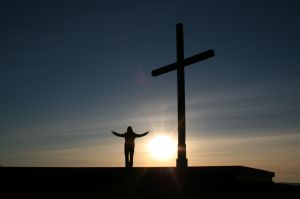
Who Are We Following? Part 3: Which Jesus?

Photo by Pixabay on Pexels.com

Jesus once asked His disciples, “Who do people say that I am?” and received a variety of answers. The same holds true today. Everyone who hears about Jesus has to wrestle with this question. Did he exist? Does he exist now? If so, who was/is he? What does it mean to follow him?

People either believe Jesus existed, don’t believe he existed, or don’t care whether he existed. Most modern scholars agree that a man named Jesus did exist. They point to both Christian and non-Christian early writings which make reference of him. Generally they agree that Jesus was a teacher, had a reputation as a miracle worker, had a brother named James, and died a violent death. People that claim Jesus never existed have the right to say that but the facts don’t support their belief.

In this blog, I am going to focus on those who believe that Jesus lived, rose, and is who he said he is. However just believing Jesus is God does not make us a Christian. James 2:19 makes reference to faith in Jesus when he wrote “Even the demons believe – and shudder!”  What makes us a Christian is submitting ourselves to Jesus’ ownership over us. We follow all that he said, even the hard things. You would think that would result in a group of like-minded people, all worshipping and serving the same Savior. But as I talk to people, read social media posts, and listen to podcasts, it’s clear that not everyone sees Jesus the same way. People who call themselves Christians may describe very different Jesus’ – often one that supports their lifestyle or worldview. For example, there’s a social justice Jesus who was mostly concerned with the poor and needy, a religious Jesus who spent his time spiritualizing everything, and a philosopher Jesus who preached wise messages. Which Jesus is the one we are to follow? Does it matter?

  1. The Social Justice Jesus.

Those who follow this Jesus claim that he went around defending the poor and the marginalized. He taught equality and good relationships between all people. He spoke mainly of love, mercy, and peace. He accepted everyone as they were without judgment. This is the Jesus that society is most willing to accept. This Jesus says and does what confirms what society wants to say and do. This Jesus accepts every lifestyle, judges no one, and lives in peace with everyone.

I agree that Jesus defended the victimized and taught good relationships. However, Scripture doesn’t support that he accepted everyone without judgment or was concerned about social programs. He was very critical of hypocrites (Matthew 23, Luke 6:42), his ministry was for the Jews, not the Gentiles (Matthew 15:24), he told people to stop sinning after healing them (John 5:14; 8:11), he said he came to bring division (Luke 12:51), and his main message was to repent (Matthew 4:17).

In a way, people who follow the social justice Jesus seem to be actually following society.

  • The Religious Jesus.

Those who follow this Jesus say that he was holy, never sinned, and spoke about spiritual matters all the time. He was solemn, prayed a lot, and was mostly concerned with people’s relationship with God. He preached about sin and judgment and hell and doing good works.

Jesus was certainly holy and never sinned, and he constantly redirected people’s minds towards the kingdom. But he wasn’t the solemn, hand-folding man that kept his distance from sinners. He actually ate with sinners, attended parties and dinners, and contradicted the religious leaders. He had to have laughed and enjoyed people for children to be attracted to him. In fact, he ran the full range of human emotions from joy to grief.

In a way, people who follow the religious Jesus seem to be actually following religion.

  • The Philosopher Jesus

Those who follow this Jesus say that he had many wise sayings about how the inner self affects behavior. He made suggestions for getting along with others and how to live a peaceful life that would end with entrance into heaven.

There is no doubt that Jesus was full of wise sayings and parables. The Gospels are full of them. They are truthful and helpful in knowing the spiritual world and how to walk as a Christian. But this is not all that Jesus talked about. He said he was God (John 2:25-26; 8:58), warned that those who didn’t obey his words would face the wrath of God (John 3:36), that he came to bring a sword instead of peace (Matthew 10:34), and told us deny ourselves, pick up our cross, and follow him (Luke 9:23). Viewing Jesus as just a wise teacher but dismissing the harder things is contradictory. Either he was wise and everything he said was true – or he was deceived or even crazy to make the claims he did.

In a way, people who follow the philosopher Jesus seem to be actually following themselves.

Other groups include Word of Faith (power, healing), Prosperity (wealth), deliverance ministries (freedom and experiences), hypercharismatic (feelings and experiences) and many more. Each group contains truth, but also error. By picking out some scriptures that support their view and ignoring the rest, their followers only get a Jesus in the image they prefer. This is deceptive, and deception is of the devil. Even worse is using those Scriptures to fight Christians who hold different views. If Satan can divide us and pit us against each other, he’s won a great victory. He has effectively weakened our light, tainted our testimony, and gotten everyone’s eyes on man instead of on God.

One of Jesus’ purposes in becoming man was to restore the relationship between God and man so that man could have eternal life with God (John 3:16-17. The peace the angels sang about is peace between God and man. God created man. Man sinned. Jesus paid the price of that sin. Relationship restored. Along the way he healed people to show who he was (John 36-38), directed people towards the kingdom of God, and spoke with wisdom and authority. He accepted people but spoke out against their sin (Mark 9:42-48; John 8:34). He cared about the poor but never rallied for social programs. Instead he told people not to worry but to trust God for their needs (Matthew 6:25-26). He spent much time with his Father (Luke 5:15-16) but thoroughly enjoyed attending parties and dinners of sinners as part of his ministry (Mark 2:17). He spoke about the kingdom but demanded obedience in order to get there (Matthew 7:21). His final direction to his followers was to call all people to repent and to become disciples (Matthew 28:19-20; Luke 24:45-47).

Jesus is much bigger and more complex than just what we see from our own biases. Christianity is not a cafeteria where we get to pick from the Bible what looks good to us. We follow all that Jesus said, even the hard things whether we understand or agree with them or not.

So… who are we following? The Jesus as he has revealed himself to us or the Jesus we create to support our beliefs and desires, the one that seems right in our own minds?


Scriptures:

Woe to you, scribes and Pharisees, hypocrites! For you clean the outside of the cup and the plate, but inside they are full of greed and self-indulgence. Matthew 23:25

How can you say to your brother, “Brother, let me take out the speck that is in your eye.” When you yourself do not see the log that is in your own eye? You hypocrite, first take the log out of your own eye, and then you will see clearly to take out the speck that is in your brother’s eye. Luke 6:42

Do you think that I have come to give peace on earth? No, I tell you, but rather division. Luke 12:51

Afterward Jesus found him in the temple and said to him, “See, you are well. Sin no more, that nothing worse may happen to you.” John 5:14

She said, “No one, Lord.” And Jesus said, “Neither do I condemn you; go, and from now on sin no more.” John 8:11

From that time Jesus began to preach, saying, “Repent, for the kingdom of heaven is at hand.” Matthew 4:17

He answered, “I was sent only to the lost sheep of the house of Israel.” Matthew 15:24

Whoever believes in the Son has eternal life; whoever does not obey the Son shall not see life but the wrath of God remains on him. John 3:36

The woman said to him, ‘I know that Messiah is coming (he who is called Christ). When he comes, he will tell us all things. “Jesus said to her, “I who speak to you am he.” John 4:25-26

Jesus said to them, “Truly, truly, I say to you, before Abraham was, I am.” John 8:58

For whoever would save his life will lose it, but whoever loses his life for my sake will save it. Luke 9:24

And he said to all, “If anyone would come after me, let him deny himself and take up his cross daily and follow me. Luke 9:23

‘Do not think that I have come to bring peace to the earth, I have not come to bring peace, but a sword. Matthew 10:34

And when Jesus heard it, he said to them, “Those who are well have no need of a physician, but those who are sick. I came not the call the righteous, but sinners.” Mark 2:17

But now even more the report about him went abroad, and great crowds gathered to hear him and to be healed of their infirmities. But he would withdraw to desolate places and pray. Luke 5:15-16

Then he ope3ned their minds to understand the Scriptures and said to them, ‘Thus it is written that the Christ should suffer and on the third day rise from the dead, and that repentance for the forgiveness of sins should be proclaimed in his name to all nations beginning from Jerusalem. Luke 24:45-47

Jesus answered them, “Truly, truly, I say to you, everyone who practices sin is a slave to sin. John 8:34

Whoever causes one of these little ones who believe in me to sin, it would be better for him if a great millstone were hung around his neck and he were thrown into the sea. And if your hand causes you to sin, cut it off. It is better for you to enter life crippled than with two hands to go to hell, to the unquenchable fire. And if your foot causes you to sin, cut it off. It is better for you to enter life lame than with two feet be thrown into hell. And if your eye causes you to sin, tear it out. It is better for you to enter the kingdom of God with one eye than with two eyes to be thrown into hell, where their worm does not die and the fires are not quenched. Mark 9:42-48

Go, therefore and make disciples of all nations, baptizing them in the name of the Father and the Son and the Holy Spirit, teaching them to observe all that I have commanded you. And behold, I am with you always, to the end of the age. Matthew 28:19-20

Therefore I tell you, do not be anxious about your life, what you will eat or what you will drink, nor about your body, what you will put on. Is not life more than food, and the body more than clothing? Look at the birds of the air: they neither sow nor reap nor gather into barns, and yet your heavenly Father feeds them. Are you not of more value than they? Matthew 6:25-26

“Not everyone who says to me, ‘Lord, Lord,’ will enter the kingdom of heaven, but the one who does the will of my Father who is in heaven. Matthew 7:21

For, being ignorant of the righteousness of God, and seeking to establish their own, they did not submit to God’s righteousness. Romans 10:3

Do you day of him whom the Father consecrated and sent into the world, ‘You are blaspheming because I said, ‘I am the Son of God’? If I am not doing the works of my Father, then do not believe me, but if I do them, even though you do not believe me, believe the works, that you may know and understand that the Father is in me and I am in the Father.” John 36-38

For God so loved the world that he gave his only Son, that whoever believes in him should not perish but have eternal life. For God did not send his Son into the world to condemn the world, but in order that the world might be saved through him. John 3:16-17

Who Are We Following? Part 2 Spiritual Beliefs

Photo by Wallace Chuck on Pexels.com

With the exception of what some atheists say about themselves, we all have spiritual beliefs. And we all believe that what we believe is the truth. But how often do we consider the origin of what we actually believe? I say actually, because often we say we believe something but our actions prove that we really don’t.

Usually we take on the beliefs of whoever we are following. Whether that be our parents, the religion we grew up in, the education we received, those we esteem as being wiser or better than ourselves, or our own reasoning, we rarely give much thought to why we believe what we believe. We believe because someone in authority told us to believe. We believe because it feels right to us. We believe because it seems logical to our way of thinking. We believe because it makes us feel part of a group.  Or we believe because we had a spiritual encounter. Regardless of how we formed our beliefs, they become part of who we are. They can change over time as we learn and mature – if we think about what we believe – but for most people beliefs become set and are very hard to change. Have you noticed how defensive people can get when talking about them? Almost as much as when talking about politics. In my view, that’s because they are not looking at their beliefs objectively. Their beliefs go very deep in their hearts and they cannot separate who they are from what they believe.

Over the years, especially the last year or two, I have felt God leading me to examine everything I believe. I have been surprised, sometimes even shocked, to find out just how much of what I believe did not come from Him. I imagine the Jews at the time when Jesus walked the earth must have felt the same whenever Jesus spoke against some of what the religious leaders were teaching.  He sometimes began by saying, “You have heard it said,” and then continue with, “but I say.” God had given Moses the laws they were to follow, but over the centuries, religious leaders added to them. Most likely, some had good intentions. Their job was to assist the Jews in their worship and sacrifices to God as well as to model how to live pure lives. They probably added laws that they felt made God’s laws clearer. But others added or enforced laws to increase their own power and prestige.  Such were the Pharisees and the Sadducees that Jesus strongly and clearly spoke out against, especially with all those woes in Matthew 23.

Jesus warned against the danger of wrong beliefs by comparing them to leaven.  “Beware of the leaven of the Pharisees and Sadducees.” Then they (the disciples) understood that he did not tell them to beware of the leaven of bread, but of the teaching of the Pharisees and Sadducees. Matthew 16:11b-12. Mark adds “the leaven of Herod” (Mark 8:15) so it’s not just what the Jews were learning from religion but also what they were learning from secularism.

So what do you believe? How do you determine what is true?  For Christians, that would be the Bible. Not a religious leader no matter how famous or important or loved. Not your pastor or your family or your own reasoning. They may be preaching truth, but we should be like the Bereans in Acts 17 who examined the Scriptures nightly to see if what Paul was preaching was true.

When God told me to have a Scripture for each thing I told people in my blogs or other writings, I was amazed at what I found. Or rather, what I didn’t’ find. I was raised in a strict denomination with many rules and traditions. I was part of the early Charismatic movement with its heavy emphasis on the gifts of the Spirit. I got into the Enneagram when it was first introduced into my group of Christian friends. I followed the Word of Faith and the Prosperity Gospel teachings, again in its earlier days. I attended the services of varying denominations. I read multiple books on different religions and on the history of Christianity. I immersed myself in science fiction through books, TV shows, and movies. My faith – the things I believed – was knowingly and unknowingly influenced by all of these areas. As I began to examine what I believed by searching for it in the Scriptures, it turns out some of it was true, but a lot of it was not found in the Bible. In fact, some of it bordered on the occult and new thought (Christianized occult practices and beliefs) and was actually condemned in the Bible. I then had a choice: continue to believe what I wanted to believe, or repent and change to line up with God’s Word.

It’s hard to accept that something we hold near and dear to our hearts could be partially or completely untrue. Some that come to mind are…

God helps those who help themselves.

God wants everyone healthy and wealthy.

If I am good enough, I will get into heaven.

Being sick is caused by sinning.

Disasters in our lives are caused by Satan attacking us.

Jesus died for my past sins, but I have to pay for my current and future sins.

We are all children of God.

I used to believe each of those at some point in my life, but have since found Scriptures that reveal the fallacy of such beliefs. Let me know if you want me to send you some of the Scriptures I found.

Stay tuned. Next, I plan to start examining specific beliefs.


Note about the Bible, it’s important to read the context of whatever verse is being referenced. Biblical verses taken out of context can be made to say or support anything. John 6:27 is a good example.

John 6:27 Do not work for the food that perishes, but for the food that endures to eternal life, which the Son of Man will give to you. For on him God the Father has set his seal.

If we pulled this Scripture by itself without considering it in the context of the rest of the Bible, we might use it to believe that we shouldn’t have jobs. We might think that we should only do spiritual things and that our food will come directly from Jesus. However, reading through the other books in the Bible, we know that we are supposed to live in the world (have jobs, support our families) but not be of it (with the same world views, morality, ambitions). Our focus should be on the kingdom of heaven – spiritual matters – without expecting others to take care of us (see the last Scriptures listed below).

Scriptures:

Seven Woes to the Scribes and Pharisees

Matthew 23 Then Jesus said to the crowds and to his disciples, “The scribes and the Pharisees sit on Moses’ seat, so do and observe whatever they tell you, but not the works they do. For they preach, but do not practice. They tie up heavy burdens, hard to bear,[a] and lay them on people’s shoulders, but they themselves are not willing to move them with their finger. They do all their deeds to be seen by others. For they make their phylacteries broad and their fringes long, and they love the place of honor at feasts and the best seats in the synagogues and greetings in the marketplaces and being called rabbi[b] by others. But you are not to be called rabbi, for you have one teacher, and you are all brothers.[c] And call no man your father on earth, for you have one Father, who is in heaven. 10 Neither be called instructors, for you have one instructor, the Christ. 11 The greatest among you shall be your servant. 12 Whoever exalts himself will be humbled, and whoever humbles himself will be exalted.

13 “But woe to you, scribes and Pharisees, hypocrites! For you shut the kingdom of heaven in people’s faces. For you neither enter yourselves nor allow those who would enter to go in.[d] 15 Woe to you, scribes and Pharisees, hypocrites! For you travel across sea and land to make a single proselyte, and when he becomes a proselyte, you make him twice as much a child of hell[e] as yourselves.

16 “Woe to you, blind guides, who say, ‘If anyone swears by the temple, it is nothing, but if anyone swears by the gold of the temple, he is bound by his oath.’ 17 You blind fools! For which is greater, the gold or the temple that has made the gold sacred? 18 And you say, ‘If anyone swears by the altar, it is nothing, but if anyone swears by the gift that is on the altar, he is bound by his oath.’ 19 You blind men! For which is greater, the gift or the altar that makes the gift sacred? 20 So whoever swears by the altar swears by it and by everything on it. 21 And whoever swears by the temple swears by it and by him who dwells in it. 22 And whoever swears by heaven swears by the throne of God and by him who sits upon it.

23 “Woe to you, scribes and Pharisees, hypocrites! For you tithe mint and dill and cumin, and have neglected the weightier matters of the law: justice and mercy and faithfulness. These you ought to have done, without neglecting the others. 24 You blind guides, straining out a gnat and swallowing a camel!

25 “Woe to you, scribes and Pharisees, hypocrites! For you clean the outside of the cup and the plate, but inside they are full of greed and self-indulgence. 26 You blind Pharisee! First clean the inside of the cup and the plate, that the outside also may be clean.

27 “Woe to you, scribes and Pharisees, hypocrites! For you are like whitewashed tombs, which outwardly appear beautiful, but within are full of dead people’s bones and all uncleanness. 28 So you also outwardly appear righteous to others, but within you are full of hypocrisy and lawlessness.

29 “Woe to you, scribes and Pharisees, hypocrites! For you build the tombs of the prophets and decorate the monuments of the righteous, 30 saying, ‘If we had lived in the days of our fathers, we would not have taken part with them in shedding the blood of the prophets.’ 31 Thus you witness against yourselves that you are sons of those who murdered the prophets. 32 Fill up, then, the measure of your fathers. 33 You serpents, you brood of vipers, how are you to escape being sentenced to hell? 34 Therefore I send you prophets and wise men and scribes, some of whom you will kill and crucify, and some you will flog in your synagogues and persecute from town to town, 35 so that on you may come all the righteous blood shed on earth, from the blood of righteous Abel to the blood of Zechariah the son of Barachiah,[f] whom you murdered between the sanctuary and the altar. 36 Truly, I say to you, all these things will come upon this generation.

“You have heard it that was said, ‘You shall love your neighbor and hate your enemy. But I say to you, love your enemies and pray for those who persecute you,” Matthew 5:43-44

The brothers immediately sent Paul and Silas away by night to Berea, and when they arrived they went into the Jewish synagogue. Now these Jews were more noble than those in Thessalonica; they received the word with all eagerness, examining the Scriptures daily to see if these things were so. Acts 17:10-11

Let the thief no longer steal, but rather let him labor, doing honest work with his own lands, so that he may have something to share with anyone in need. Ephesians 4:28

Whatever you do, work heartily, as for the Lord and not for men, Colossians 3:23

Nor did we eat anyone’s bread without paying for it, but with toil and labor we worked night and day, that we might not be a burden to any of you. 2 Thessalonians 3:8

For even when we were with you, we would give you this command: If anyone is not willing to work, let him not eat. For we hear that some among you walk in idleness, not busy at work, but busybodies. Now such persons we command and encourage in the Lord Jesus Christ to do their work quietly, and to earn their own living. 2 Thessalonians 3:10-12

Who Are We Following? Part 1 The Kingdom of Heaven

Photo by Pixabay on Pexels.com

We choose who to follow based on who we think will best get us to where we want to go. This is true with both earthly aspirations and spiritual destinations. Christians usually have both, but the ultimate destination would be heaven.

I used to think that the kingdom of heaven was just another way of saying heaven. Or it’s the time when Jesus reigns for a thousand years on earth or when the New Jerusalem comes down to a new earth. There are scriptures that can support each of those ideas. They are all in the future making the kingdom of God something we could look forward to but didn’t impact us in our day to day lives here and now. But Jesus also talked about the kingdom of heaven as being here now.

Being asked by the Pharisees when the kingdom of God would come, he answered them, “The kingdom of God is not coming in ways that can be observed, nor will t hey say, ‘Look, here it is!’ or ‘There!’ for behold, the kingdom of God is in the midst of you.” Luke 17:20-21

When the Pharisees accused Jesus of casting out demons by the power of Beelzebub, part of Jesus’ response was “But if it is by the Spirit of God that I cast out demons, then the kingdom of God has come upon you.” Matthew 12:28

So the kingdom of God is both a present reality and a future promise. It can be described as “already, but not yet” – active right now in the hearts of believers but will achieve its full manifestation in the future.

Believers can be likened to athletes. Everyone acknowledges and appreciates athletes as they compete, but few consider that the same people are athletes outside their competitions. They live in the now the same way they will at the time of their competitions. They practice the same skills. They have the same mind set. They live with the same self-control. Their eyes are focused on the future, yet they live in the present as if it were the future. No serious athlete would live a life of self-gratification, conform to the lifestyle of those around them, and follow what sounds reasonable and good to them. They don’t wait until their competition to get in shape. They find a professional trainer and follow what they are told to do, trusting in their expertise.

Believers have their eyes set on the future kingdom in which they will reign with Christ, but they live as if they are living in the kingdom now. Same rules, same mind set, same self-control. They find and follow a professional trainer – the Word – and do what it says, trusting God to know what He’s talking about. So the kingdom of God is already here, in our hearts and lives, but not yet because the full manifestation has not happened yet.

Knowing this, we can begin to discern who we are following. Are we following the Trainer who demands what is best for us no matter how hard? Do we follow someone who says things we want to hear? Do we follow our own ideas of how things should be? Or do we follow the suggestions of the devil who wants nothing more than to destroy us?

(to be continued)

The Bible speaks a lot about the kingdom of heaven; here are a few facts.

Christians know a little about the kingdom of heaven because He reveals secrets about His kingdom to His people, not to the whole world. The world as a whole cannot understand spiritual things so they are not going to understand our behavior, beliefs, and decisions at times.

Then the disciples came and said to him, “Why do you speak to them in parables?” And he answered them, “To you it has been given to know the secrets of the kingdom of heaven, but to them it has not been given. Matthew 13:10-11

The natural person does not accept the things of the Spirit of God, for they are folly to him, and he is not able to understand them because they are spiritually discerned. 1 Corinthians 2:14

Not everyone who appears to be part of God’s kingdom are children of the kingdom. Many are there for reasons other than belonging to God. Some who call themselves Christians do so because they were born into families that attended church and so they attend church. Some think that believing that Jesus existed is enough to belong. Some are truly deceived into believing their ideas are as much truth as the words of God. Some really do love God, but choose to be their own king instead of accepting the kingship of Jesus. Some make up their own versions of the Jesus they want to follow. And some use the label ‘Christian’ to further their selfish goals – they do Christian things to feel good, make money, or gain prestige. They love healing but not holiness; they love power but not purity; they love wonders but not the will of God.

He put another parable before them, saying, “The kingdom of heaven may be compared to a man who sowed good seed in his field, but while his men were sleeping, his enemy came and sowed weeds[c] among the wheat and went away. So when the plants came up and bore grain, then the weeds appeared also. And the servants[d] of the master of the house came and said to him, ‘Master, did you not sow good seed in your field? How then does it have weeds?’ He said to them, ‘An enemy has done this.’ So the servants said to him, ‘Then do you want us to go and gather them?’ But he said, ‘No, lest in gathering the weeds you root up the wheat along with them. Let both grow together until the harvest, and at harvest time I will tell the reapers, “Gather the weeds first and bind them in bundles to be burned, but gather the wheat into my barn.”’” Matthew 13:24-30

“Not everyone who says to me, ‘Lord, Lord,’ will enter the kingdom of heaven, but the one who does the will of my Father who is in heaven. On that day many will say to me, ‘Lord, Lord, did we not prophesy in your name, and cast out demons in your name, and do many mighty works in your name?’ And then will I declare to them, ‘I never knew you; depart from me, you workers of lawlessness.’ Matthew 7:21-23

We must be born of the Spirit to see and enter the kingdom of heaven. We can’t enter on the backs of other people.  We can’t earn our way in. We can’t buy our way in. We can’t bully our way in. We can’t deceive our way in. We can’t even pray our way in. We must be born again, which means we must accept Jesus as both Savior and King. We pledge ourselves to Him. We obey His commands over what we want and over what others say. We no longer exist for ourselves but we exist to love and serve Him.

Jesus answered him, “Truly, truly, I say to you, unless one is born again he cannot see the kingdom of God.” John 3:3

Because if you confess with your mouth that Jesus is Lord and believe in your heart that God raised him from the dead, you will be saved. Romans 10:9

And this is his commandment, that we believe in the name of his Son Jesus Christ and love one another, just as he has commanded us. 1 John 3:23

God’s kingdom will overcome all other kingdoms and will never be destroyed.

And in the days of those kings the God of heaven will set up a kingdom that shall never be destroyed, nor shall the kingdom be left to another people. It shall break in pieces all these kingdoms and bring them to an end, and it shall stand forever. Daniel 2:44

Other Scriptures:

Do you not know that in a race all runners run, but only one receives the prize? So run that you may obtain it. Every athlete exercises self-control in all things. They do it to receive a perishable wreath, but we an imperishable. So I do not run aimlessly; I do not box as one beating the air. But I discipline my body and keep it under control lest after preaching to others I myself should be disqualified. 1 Corinthians 9:24-27

You then, my child, be strengthened by the grace that is in Christ Jesus, and what you have heard from me in the presence of many witnesses entrust to faithful men, who will be able to teach others also. Share in my suffering as a good soldier in Christ Jesus. No soldier gets entangled in civilian pursuits, since his aim is to please the one who enlisted him. An athlete is not crowned unless he competes according to the rules. 2 Timothy 1-5

“Then the kingdom of heaven will be like ten virgins who took their lamps[a] and went to meet the bridegroom. Five of them were foolish, and five were wise. For when the foolish took their lamps, they took no oil with them, but the wise took flasks of oil with their lamps. As the bridegroom was delayed, they all became drowsy and slept. But at midnight there was a cry, ‘Here is the bridegroom! Come out to meet him.’ Then all those virgins rose and trimmed their lamps. And the foolish said to the wise, ‘Give us some of your oil, for our lamps are going out.’ But the wise answered, saying, ‘Since there will not be enough for us and for you, go rather to the dealers and buy for yourselves.’ And while they were going to buy, the bridegroom came, and those who were ready went in with him to the marriage feast, and the door was shut. Afterward the other virgins came also, saying, ‘Lord, lord, open to us.’ But he answered, ‘Truly, I say to you, I do not know you.’ Watch therefore, for you know neither the day nor the hour. Matthew 25:1-13

Throw Out the Bath Water – But not the Baby

With all the stuff coming out lately – the Epstein files, false prophets, immoral pastors – it seems that the people who have been speaking out against rich white males have a point. Rich and powerful men have been doing all kinds of bad things for many years. And most of these have been white.

Yet there are millions of adult white men who are nothing like these. Millions of adult white men are living decent lives. They work hard to support their families, give of themselves to their community, and share their resources with those in need. Judging all white men because of those who are doing wrong is like throwing the baby out along with the dirty bath water. Besides, there are plenty of non-white men doing evil – and it’s not limited to just men. Women can be just as evil.

We need to get rid of the evil but let’s not do so at the cost of the baby. Let’s clean up our lives so our light, which comes from Jesus, will shine in dark places and we can rightly call out the evil happening around us.

Do not judge by appearances, but judge with right judgment. John 7:24

Take no part in the unfruitful works of darkness, but instead expose them. Ephesians 5:11

But when anything is exposed by the light, it becomes visible, Ephesians 5:13

The light shines in the darkness, and the darkness has not overcome it. John 1:5

Wedding Vows Can Be Hazardous to Your Marriage Part 5 Biblical Marriage Vows

A vow is a solemn, voluntary, one-party promise, usually to God, to perform a specific action.

On the other hand, a covenant is a formal, binding, and often unconditional agreement between two or more parties – marriage; God and His people – often involving long-term, mutual commitment.

Would we take our wedding vows more seriously if we were to sit together and draw up a covenant instead of reciting some vows?  How would that sound?

Maybe like this…

We enter into this marriage in order to walk together through life as one flesh, joined together until death. We look to Jesus, who holds all things together, to meet our needs and to help and council us as we seek His Kingdom first.

I, (groom), will love you, (bride), as Jesus loved the church. I will give myself up for you, nourishing and cherishing you as I do my own body.  I will treat you with gentleness and understanding, and honor you as a fellow heir.

I, (bride), I will love and respect you, (groom), as my spiritual head and submit myself to you as to the Lord. I will adorn myself with a gentle and quiet spirit.

We will love each other, not as defined by the world but as defined in 1 Corinthians 13. We will do nothing from selfish desires, but will, with all humility and gentleness, with patience, bear with each other in love as we pursue the peace and unity of the Spirit. We will apologize when we fail, forgive as Christ forgives us, pray for each other, and use the gifts we have received from the Holy Spirit to build each other up.

This covenant or set of vows, which elaborates om and paints a clearer picture of the traditional “to have and to hold” vows, would help us think seriously about entering into marriage, and set clear expectations.. It won’t be easy to keep but being Biblical; it comes with the promise that God will help us. It is also easy to find. I made my vows more than forty years ago, and I can’t remember now anything I said that day. But if I had made a covenant such as the one above, I wouldn’t have to try to remember. It would be right there in the Bible to read as often as I needed to.

It’s too late for those of us who have already made unrealistic or vague vows we can’t, haven’t, or have trouble keeping. But what if we recommitted to each other with a new, God-powered covenant? How would that affect our marriages going into the future?

It might be worth a try.


Scriptures (there are a lot of them)

But from the beginning of creation, ‘God made them male and female.’  ‘Therefore a man shall leave his father and mother and hold fast to his wife, 8and the two shall become one flesh.’ So they are no longer two but one flesh.  What therefore God has joined together, let not man separate.” Mark 10:6-9

If a man vows a vow to the Lord, or swears an oath to bind himself by a pledge, he shall not break his word. He shall do according to all that proceeds out of his mouth. Numbers 30:2

When you vow a vow to God, do not delay paying it, for he has no pleasure in fools. Pay what you vow. It is better that you should not vow than that you should vow and not pay. Let not your mouth lead you into sin, and do not say before the messenger that it was a mistake. Why should God be angry at your voice and destroy the work of your hands? Ecclesiastes 5:4-6

And he is before all things, and in him all things hold together. Colossians 1:17

And my God will meet all of your needs according to the riches of his glory in Christ Jesus. Philippians 4:19

Seek first the kingdom of God and his righteousness, and all these things will be added to you. Matthew 6:33

Fear not, for I am with you; be not dismayed, for I am your God; I will strengthen you, I will help you, I will uphold you with my righteous right hand. Isiah 41:10

I will instruct you and teach you in the way you should go; I will counsel you with my eye upon you. Psalm 32:8

Wives, submit to your own husbands, as to the Lord.  For the husband is the head of the wife even as Christ is the head of the church, his body, and is himself its Savior.  Now as the church submits to Christ, so also wives should submit in everything to their husbands. Husbands, love your wives, as Christ loved the church and gave himself up for her,  that he might sanctify her, having cleansed her by the washing of water with the word,  so that he might present the church to himself in splendor, without spot or wrinkle or any such thing, that she might be holy and without blemish. In the same way husbands should love their wives as their own bodies. He who loves his wife loves himself.  For no one ever hated his own flesh, but nourishes and cherishes it, just as Christ does the church, because we are members of his body.  “Therefore a man shall leave his father and mother and hold fast to his wife, and the two shall become one flesh.”  This mystery is profound, and I am saying that it refers to Christ and the church.  However, let each one of you love his wife as himself, and let the wife see that she respects her husband. Ephesians 5:22-33

Likewise, wives, be subject to your own husbands, so that even if some do not obey the word, they may be won without a word by the conduct of their wives, when they see your respectful and pure conduct.  Do not let your adorning be external—the braiding of hair and the putting on of gold jewelry, or the clothing you wear— but let your adorning be the hidden person of the heart with the imperishable beauty of a gentle and quiet spirit, which in God’s sight is very precious.  For this is how the holy women who hoped in God used to adorn themselves, by submitting to their own husbands, 6as Sarah obeyed Abraham, calling him lord. And you are her children, if you do good and do not fear anything that is frightening.1 Peter 3:1-5

Likewise, husbands, live with your wives in an understanding way, showing honor to the woman as the weaker vessel, since they are heirs with you of the grace of life, so that your prayers may not be hindered. 1 Peter 3:7

Wives, submit to your husbands, as is fitting in the Lord. Husbands, love your wives, and do not be harsh with them. Colossians 3:18-19

Whatever you do, work heartily, as for the Lord and not for men, knowing that from the Lord you will receive the inheritance as your reward. You are serving the Lord Christ. Colossians 3:23-24

Looking to Jesus, the founder and perfecter of our faith, who for the joy that was set before him endured the cross, despising the shame, and is seated at the right hand of the throne of God. Hebrews 12:2

Do nothing from selfish ambition or conceit, but in humility count others more significant than yourselves. Philippians 2:3

To each is given the manifestation of the Spirit for the common good. 1 Corinthians 12:7

Therefore, confess your sins to one another and pray for one another, that you may be healed. The prayer of a righteous person has great power as it is working James 5:16

With all humility and gentleness, with patience, bearing with one another in love, eager to maintain the unity of the Spirit in the bond of peace. Ephesians 4:2-3

Be kind to one another, tenderhearted, forgiving one another, as God in Christ forgave you. Ephesians 4:32

Love is patient and kind; love does not envy or boast; it is not arrogant or rude. It does not insist on its own way; it is not irritable or resentful; it does not rejoice at wrongdoing, but rejoices with the truth. Love bears all things, believes all things, hopes all things, endures all things.1 Corinthians 13:4-7

Therefore, confess your sins to one another and pray for one another, that you may be healed. The prayer of a righteous person has great power as it is working. James 5:16

And God is able to make all grace abound toward you; that you, always having all sufficiency in all things, may abound in every good work… 2 Corinthians 9:8

Wedding Vows Can Be Hazardous to Your Marriage Part 4 Marriage God’s Way

The Bible has a lot to say about marriage. When to get married, when not to get married, why get married, the roles of each spouse, and how to treat each other. Based on this, marriage must be either important to God or problematic for people. I think it’s both.

Marriage is important to God because it is a picture of Jesus’ relationship with us, His church. The love and faithfulness, service and fellowship that He gives and wants in return is how He planned marriages to be – with one big difference: He is faithful even when we are not.

Marriage is problematic for people for two reasons. One is because we are generally self-centered. Whether we realize it or not, we live as if the world revolves around us. If we go into marriage with this mindset, we will eventually feel let down or betrayed.

The other reason is our expectations. We may serve people for a time – food banks, mission trips, volunteer opportunities – not expecting much in return. We may look to others – friends, family, nonprofits, government – to meet our needs knowing they may not always be able to. But we tend to expect more out of our spouses even though they have the same weaknesses as everyone else. Could that higher expectation be part of the reason?

In biblical marriages we are encouraged to treat each other as Jesus treats us – not as we treat each other. We are encouraged to look to Jesus to fill all our needs – not expect our spouse to carry that load. We are encouraged to forgive each other like Jesus forgives us – daily, without holding a grudge, and without keeping score. And we are encouraged to serve each other, to think of our spouse over our own desires – like Jesus did for us when He lived and died for us.

What would happen if we entered into a marriage with these goals in mind? How would our vows be shaped by these goals?

 That’s what I will explore in the final part, Part 5.

Scriptures

For your Maker is your husband, the LORD of hosts is his name Isaiah 54:5a  

For your Maker is your husband, the Lord of hosts is his name; and the Holy One of Israel is your Redeemer, the God of the whole earth he is called. Isaiah 54:5 

 “Therefore a man shall leave his father and mother and hold fast to his wife, and the two shall become one flesh.”This mystery is profound, and I am saying that it refers to Christ and the church. Ephesians 5:31-32

Let us rejoice and exult and give him the glory, for the marriage of the Lamb has come, and his Bride has made herself ready; it was granted her to clothe herself with fine linen, bright and pure”— for the fine linen is the righteous deeds of the saints. And the angel said to me, “Write this: Blessed are those who are invited to the marriage supper of the Lamb.” And he said to me, “These are the true words of God.” Revelation 19:7-9

I am jealous for you with a godly jealousy. I promised you to one husband, Christ, so that I might present you as a pure virgin to him. 2 Corinthians 11:2

Let marriage be held in honor among all, and let the marriage bed be undefiled, for God will judge the sexually immoral and adulterous. Heb 13:4

Husbands love your wives, as Christ loved the church and gave himself up for her, that he might sanctity her, having cleansed her by the washing of water and the word, so that he might present the church to himself in splendor without spot or wrinkle or any such thing, that she might be holy and without blemish. Ephesians 5:25-27

Wedding Vows Can Be Hazardous to Your Marriage Part 3 Statistics

The good news is that the divorce rate in the US is declining. However, the marriage rate is also declining. (See statistics at the end of this blog.) More people are waiting until late in life or never to get married. Many of these people are living with someone instead of marrying them. When these relationships break up, the number is not added to the divorce rate since they were never married. But that doesn’t mean they weren’t experiencing the same difficulties of a married couple. The number of couples (married and unmarried) seeking marriage counseling instead of jumping into divorce is increasing which is also lowering the divorce rate.

The bad news is that the divorce rate is still high. Some put it at almost 50%. And sadly, Christian marriages do not have better numbers. In fact, Christians are slightly more likely to divorce than nonChristians. (see statistics at the end of this blog.)

This is not what Jesus intended for us. He gave us through His Word the dos and don’ts of marriages and the power of the Holy Spirit to live it out. So why aren’t we? I think that our wedding vows may have something to do with it.

We often make unbiblical and unrealistic promises that form a vision of what life together will look like. It sets our expectations high – too high for most people to keep long term. Then we get hurt, disappointed, disillusioned. It’s even worse when we compare our marriage to those in movies, books, social media, and in the couples around us. We start thinking about our marriage and think, “This is not what it’s supposed to be.” My spouse is not as romantic as the one in the movie last night, doesn’t provide for all my desires like the one in the book I just finished reading, and doesn’t serve me breakfast in bed on our anniversary like my friend’s spouse does. This is not the life I signed up for.

What we often don’t look at is how we tend to treat our spouses the way they treat us, often misinterpreting their motives and actions. If asked, our spouse may make the same complaints about us and come to the same conclusion about our marriage as we did. Many couples at this point decide to call it quits. But it doesn’t have to be this way.

In Part 4 we’ll take a look at marriage from a Christian perspective.

Some statistics for those who are interested in such things:

Wilkinson and Finkbeiner  (https://www.wf-lawyers.com/divorce-statistics-and-facts/)

As of 2021, both marriage rates AND divorce rates in the US are decreasing – with the marriage rate dropping from 8.2 per 1,ooo people in 2000 to 6.1 and the divorce rate from 4.0 in 2000 to 2.7. The breakdown shows that almost 50 percent of all marriages in the US will end in divorce or separation. 41 percent of first marriages, 60 percent of second marriages, and 73 percent of third marriages will end in divorce. The US has the 6th highest divorce rate in the world

Why are people divorcing? According to the Wilkinson and Finkbeiner, a recent national survey showed that lack of commitment is the most common reason.  Other reasons are:

  • Lack of commitment 73%
  • Argue too much 56%
  • Infidelity 55%
  • Married too young 46%
  • Unrealistic expectations 45%
  • Lack of equality in the relationship 44%
  • Lack of preparation for marriage 41%
  • Domestic Violence or Abuse 25%

(Respondents often cited more that one reason, therefore the percentages add up to much more than 100 percent)

Barna (https://www.barna.com/trends/marriage-divorce-trends-2025/)

Christians—even practicing Christians, who regularly attend church and say their faith is important to them—are as likely as other adults to say they have gone through divorce.

  • 20% nonpracticing Christians
  • 16% practicing Christians  
  • 16% non-Christians

My Denver Therapy (https://mydenvertherapy.com/couples-therapy-statistics/)

  • Almost 50% of married couples have gone to counseling at some point in their relationship. 
  • The median couple starts couples therapy about 4 years into the relationship. The highest percentage of couples in marriage counseling have been married between 3 and 5 years. Many say they wish they didn’t wait so long to start.
  • About 75% of couples who go to counseling see an improvement in their relationship, and 90% see an improvement in their physical or mental health. One study had 99% of couples currently in therapy say that it had a positive impact on their relationship. 

Scriptures

Listen to advice and accept instruction, that you may gain wisdom in the future. Proverbs 19:20

Wedding Vows Can Be Hazardous to Your Marriage Part 2 Saying the Quiet Part Out Loud

Have you ever stopped to really consider the promises being recited at a wedding? What if we could see into the future and then recite our vows with that in mind. What if we said the quiet part out loud? In the world, it might sound like this.

I take you…

to have and to hold, (except when you make me mad or when I am too tired or when you come in from cutting the grass all dirty and smelly or before you brush your teeth in the morning…)

 in good times and bad, (except when the bad times make you irritable, angry, or depressed or are happening because you did something stupid)

for richer and for poorer, (except when you spend all our money and max out the credit cards or because you lost your job and have many excuses why you can’t find another one…)

in sickness and in health. (except when it causes me to become your caretaker, like if you became paralyzed from an accident or developed dementia or an autoimmune disease…)

I promise to be faithful to you (as long as you are faithful to me and you keep up your appearances and you fulfill all my desires…)

and stand beside you in all things. (except when doing so will cause me to be too uncomfortable or when it cuts into my personal time)

I promise to keep laughing with you, (until your jokes get so old that all I can do is groan)

crying with you, (after the first few dozen times, you’re on your own)

and never stop finding new ways to make you smile. (except when you stop finding new ways to make me smile)

I will love, (until the emotion goes away)

honor, (as long as you are honorable and do the right things)

and cherish you (except when I take you for granted because I’m too busy thinking about myself)

all the days of our lives. (maybe most of the days, but the nights are mine)

In Part 3, we’ll take a look at some statistics.

Scriptures:

For nothing is hidden that will not be made manifest, nor is anything secret that will not be known and come to light. Luke 8:17 

Do not devise evil in your hearts against one another, and love no false oath, for all these things I hate, declares the Lord.”  Zechariah 8:17

See to it that no one takes you captive by philosophy and empty deceit, according to human tradition, according to the elemental spirits of the world, and not according to Christ. Colossians 2:8

And you will know the truth, and the truth will set you free.” John 8:32

Wedding Vows Can Be Hazardous to Your Marriage Part 1 Overview

We’ve all heard them. Sweet, love filled promises from one person to another before saying “I do.”  Some are serious, others are humorous. Some are long, some are short. Some are read from papers in trembling fingers, others are recited from the heart. But they all have one thing in common: the person saying them truly believes what they are saying. And usually, so does the recipient.

The promises in wedding vows – to always be there, to support, to respect, love, and encourage each other, etc. – are not in themselves bad. It’s okay to say and pursue them, but when we put our hope and trust in them, it can create expectations that might not be sustainable. What happens when jobs are lost, spouses lie or cheat, life goals change and conflict with each other, and love grows cold? What happens to the marriage when these wonderful-sounding expectations aren’t met?

Another problem in many wedding vows is that they are self-focused. “I love you because you make me feel good.” I love you because you encourage me with I’m feeling down.” I love how your smile lights up my heart.” If a person goes into a marriage with the expectation that their spouse fills their needs, what happens when the spouse gets sick or depressed or busy or overwhelmed – and can no longer meet these needs?

Third, vows are usually easy to keep in the early years. Then children arrive. And jobs are lost. And illnesses rage. And interests change. And more children arrive. And temptations sneak in. The promises made in the beginning are forgotten in the stress of managing busy lives. What used to makes us smile about the other becomes buried under layers of disappointments, failures, and age-related physical and mental changes.  We trusted that our partner would make our lives better and be there when things were tough. But as the years go by, little by little, one small failure after another, resentment and accusations can slowly creep into our hearts – and often out of our mouths. “You promised to make me smile every day! Well, I’m not smiling now as you play golf leaving me to struggle with our bills.”

The high divorce rate in this country, even in Christian marriages, is evidence of broken promises and unfilled expectations.

So should we set up our marriages to fail from the beginning by making promises we can’t keep? There are many warnings in the Bible about keeping vows made to God, and I would think that vows made in the deliberate presence of God would carry a similar weight. So, should vows be eliminated from a wedding?

No, I don’t think so. But I do think they should be changed.

  • Promises of what you will do in the future? You don’t know what the future holds.
  • Reasons why you love the person you’re marrying? Those reasons may become moot as your spouse changes.
  • Ways your feel loved by your future spouse? Those reasons may become buried under the concerns and burdens of everyday life.

It’s okay to describe when you knew you wanted to get married or how the other person makes you feel in the present. It’s okay to state what you want to do in the future for the other person. But none of these should be promises. Instead, what if we focused on what God will do? He’s the only one who can fulfill all of His promises and meet all of our needs.

What if a wedding vow sounded more like this:

I love you and want to spend the rest of my life with you. I want to be with you in good times and bad. I want to help you when you are down, and celebrate with you when you are up. I want to support you, grow with you, and live your dreams with you. The best way I know to accomplish this is by the strength and help that God gives me. Therefore, I promise to always keep God the center of our marriage. I promise to abide in Jesus so that I will be able to love you with the love and strength He provides. I promise to obey God’s word as it relates to marriage, and to be accountable to you for that. I promise to pray for you and for our marriage each day. Looking to Jesus to strengthen me, equip me, counsel me, and to meet all my needs, I will be free to serve you without expecting anything back. I will be free to love you as you are and as you will be as you grow and change. Together, with Jesus, I look forward to walking into the future with you.

Stay tuned for Part 2 – saying the quiet part out loud.

Scriptures:

Come now, you who say, “Today or tomorrow we will go into such and such a town and spend a year there and trade and make a profit” – yet you do not know what tomorrow will bring. What is your life? For you are a mist that appears for a time and then vanishes. Instead you ought to say, “If the Lord will, we will live and do this or that.” As it is, you boast in your arrogance. All such boasting is evil. So whoever knows the right thing to do and fails to do it, for him it is sin. James 4:13-17

And he is before all things, and in him all things hold together. Colossians 1:17

And my God will meet all of your needs according to the riches of his glory in Christ Jesus. Philippians 4:19

Seek first the kingdom of God and his righteousness, and all these things will be added to you. Matthew 6:33

Fear not, for I am with you; be not dismayed, for I am your God; I will strengthen you, I will help you, I will uphold you with my righteous right hand. Isiah 41:10

I will instruct you and teach you in the way you should go; I will counsel you with my eye upon you. Psalm 32:8

The Lord is good, a stronghold in the day of trouble; he knows those who take refuge in him. Nahum 1:7

Abide in me, and I in you. As the branch cannot bear fruit by itself, unless it abides in the vine, neither can you, unless you abide in me. I am the vine; you are the branches. Whoever abides in me and I in him, he it is that bears much fruit, for apart from me you can do nothing. John 15:4-5

Do not be conformed to this world, but be transformed by the renewal of your mind, that by testing you may discern what is the will of God, what is good and acceptable and perfect. Romans 12:2

His divine power has granted to us all things that pertain to life and godliness, through the knowledge of him who called us to his own glory and excellence… 2 Peter 1:3

And God is able to make all grace abound toward you; that you, always having all sufficiency in all things, may abound in every good work… 2 Corinthians 9:8

As for the rich in this present age, charge them not to be haughty, nor to set their hopes on the uncertainty of riches, but on God, who richly provides us with everything to enjoy. 1 Timothy 6:17

Therefore, confess your sins to one another and pray for one another, that you may be healed. The prayer of a righteous person has great power as it is working. James 5:16

Me Do It!

Photo by Polesie Toys on Pexels.com

My heart hurt as I watched my two-year-old granddaughter’s growing frustration as she struggled to fit a plastic shape into its hole. She had gotten the star and heart shapes into their openings but the triangle just wouldn’t fit into the square opening. She had gone from sliding the triangle back and forth across the opening to trying to force it with every bit of small might she had. I yearned to share my knowledge with her but each offer to help was met with a defiant, “No! Me do it!”

“There’s a special hole for each shape…” I started only to be interrupted with, “No! Me do it!”

“You can’t fit a triangle into…”  was cut off with “No! Me do it!”

“Here, let me show you…” was answered with a growl. “No! Me do it!”

So I sat back and let her work. If only she would listen.

Angry tears now filled her eyes as she pushed even harder. Failing that, she began slamming the poor triangle onto the opening. Over and over she tried. Over and over she failed until she couldn’t stand it anymore.

With a scream, she threw the triangle across the room.

I held out my arms. “Come here, baby.” Sobs racked her tiny body as she clung to me. Sitting there on the floor, I rocked her until her breathing slowed, her tears dried, and she was once again at peace.

You would think that the next time she played with that toddler toy set, she was more willing to allow me to help her. But no.  Again she insisted on doing it herself, getting upset in the process, and ending in my lap sobbing out her frustration.

Eventually, one day, she accepted my help. Then, with a triumphant smile, she gently pushed the triangle piece into the triangle opening.

I wonder if we don’t do the same thing to God. He knows how things work. He knows how to solve problems. But we think we can figure it all our on our own. We think if we work hard enough and long enough, we can solve all our problems. We ignore God’s way to create our own way.

When we do this as an individual, it’s called rebellion.

When we do this as a society, it’s called humanism.

This is Google’s summary of humanism based on American Humanist Association’s definition: Humanism is a progressive philosophy of life that emphasizes human reason, ethics, and agency to find meaning and fulfillment. It is a secular worldview that affirms individual dignity and social responsibility, using science, art, and compassion to create a more just and compassionate world. Humanism does not include supernatural beliefs or theistic views. 

In other words, humanism, which is rampant through every part of society, is mankind saying to their Father, “Me do it!”

Why do we humans continue to strive to become equal to God regardless of the consequences? Didn’t Adam and Eve teach us anything?

Why do we humans think we know better or can do better than the One who created us? Cain certainly tried, and failed.

Why do we humans repeatedly try to serve a holy God our way like the Israelites did when moving the Ark of the Covenant?  Uzzah paid the price for that.

Why do we humans insist on creating an image of God that pleases us but not Him? The golden calf should have been a clear warning.

Why do we humans keep looking to ourselves to fill our needs? David knew from experience who to trust.

Why do we humans fight so hard to be independent of God? It never worked out well for the Israelites.

Some people have said: “Oh, that just happened in the Old Testament. Today is different.”

Is it?


Adam and Eve

For God knows that when you eat of it your eyes will be opened, and you will be like God, knowing good and evil.” So when the woman saw that the tree was good for food, and that it was a delight to the eyes, and that the tree was to be desired to make one wise,[b] she took of its fruit and ate, and she also gave some to her husband who was with her, and he ate. Then the eyes of both were opened, and they knew that they were naked. And they sewed fig leaves together and made themselves loincloths. Gen 3:4-7

Cain

The Golden Calf

And he received the gold from their hand and fashioned it with a graving tool and made a golden calf. And they said, “These are your gods, O Israel, who brought you up out of the land of Egypt!” When Aaron saw this, he built an altar before it. And Aaron made a proclamation and said, “Tomorrow shall be a feast to the Lord.” And they rose up early the next day and offered burnt offerings and brought peace offerings. And the people sat down to eat and drink and rose up to play. And the Lord said to Moses, “Go down, for your people, whom you brought up out of the land of Egypt, have corrupted themselves. They have turned aside quickly out of the way that I commanded them. They have made for themselves a golden calf and have worshiped it and sacrificed to it and said, ‘These are your gods, O Israel, who brought you up out of the land of Egypt!’” And the Lord said to Moses, “I have seen this people, and behold, it is a stiff-necked people. Now therefore let me alone, that my wrath may burn hot against them and I may consume them, in order that I may make a great nation of you.” Exodus 32:4-10

The Ark of the Covenant

And he cast for it four rings of gold for its four feet, two rings on its one side and two rings on its other side. And he made poles of acacia wood and overlaid them with gold and put the poles into the rings on the sides of the ark to carry the ark. Exodus 37:3-4

And when Aaron and his sons have finished covering the sanctuary and all the furnishings of the sanctuary, as the camp sets out, after that the sons of Kohath shall come to carry these, but they must not touch the holy things, lest they die. These are the things of the tent of meeting that the sons of Kohath are to carry. Numbers 4:15

So Moses took the wagons and the oxen and gave them to the Levites. Two wagons and four oxen he gave to the sons of Gershon, according to their service. And four wagons and eight oxen he gave to the sons of Merari, according to their service, under the direction of Ithamar the son of Aaron the priest.  But to the sons of Kohath he gave none, because they were charged with the service of the holy things that had to be carried on the shoulder.  Numbers 7:6-9

David again gathered all the chosen men of Israel, thirty thousand. And David arose and went with all the people who were with him from Baale-judah to bring up from there the ark of God, which is called by the name of the Lord of hosts who sits enthroned on the cherubim. And they carried the ark of God on a new cart and brought it out of the house of Abinadab, which was on the hill. And Uzzah and Ahio, the sons of Abinadab, were driving the new cart, with the ark of God, and Ahio went before the ark. And David and all the house of Israel were celebrating before the Lord, with songs and lyres and harps and tambourines and castanets and cymbals. And when they came to the threshing floor of Nacon, Uzzah put out his hand to the ark of God and took hold of it, for the oxen stumbled. And the anger of the Lord was kindled against Uzzah, and God struck him down there because of his error, and he died there beside the ark of God. 2 Samuel 6:1-7

Trust in God

Now I know that the LORD saves his anointed; he will answer him from his holy heaven with the saving might of his right hand. Some trust in chariots and some in horses, but we trust in the name of the LORD our God. They collapse and fall, but we rise and stand upright. Psalm 20:6-8